


11th Grade Experience
Here's your path to getting started with all ThinkCERCA has to offer. Click below to discover our Best Practices resources and guides provided below to uncover how ThinkCERCA can support you in achieving your literacy goals. Whether you're seeking assistance with rostering or implementing SMART goals, we have you covered.







Enrolling



Must Moments
Walk through our six Must Moments in Literacy. Core takeaways for each "moment" include the conditions for success, training students, what successful implementation looks like, along with common challenges.






BY STRAND
LANGUAGE - GRAMMAR & VOCAB
Overview of Our Research Base: Grammar
Overview of Our Research Base: Vocabulary



Writing



Analyzing Story Elements - Narrative Arc
Writing
Understanding the structure of a story through its narrative arc
View →.png?width=300&name=Best%20Practices%20(17).png)
.png?width=300&name=Best%20Practices%20(3).png)
Best Practices: Research Toolkit
Writing
Building a habit of locating, evaluating, and using credible sources.
View →

.png?width=300&name=Best%20Practices%20(1).png)
.png?width=300&name=Best%20Practices%20(4).png)
Compare Writing
Writing
Comparing texts is a powerful tool for reading and writing skill development.
View →
.png?width=300&name=Best%20Practices%20(6).png)
Just the Facts (5 W’s and H)
Writing
Engaging in comprehensive analysis through key questions
View →.png?width=300&name=Best%20Practices%20(15).png)
On the Counter
Writing
Students evaluate the effectiveness of counterclaims in student samples and provide feedback for revisions. View →


Somebody wanted, But, So
Writing
A summarizing strategy to clarify characters' goals, conflicts, and resolutions
View →
.png?width=300&name=Best%20Practices%20(16).png)
Transitions
Writing
Students evaluate the coherence of writing samples and provide suggestions for revisions by adding transitions and linking words. View →.png?width=300&name=Best%20Practices%20(2).png)
Understanding Question Stems
Writing
Engaging in deeper comprehension through structured questioning
View →
Understanding Text Structure
Writing
Understanding how authors organize information for better comprehension
View →
.png?width=300&name=Best%20Practices%20(5).png)
What's RIGHT in Writing
Writing
Support student writing and growth by highlighting strengths with a rubric and providing next-time feedback.
View →
Reading Comprehension
.png?width=300&name=Best%20Practices%20(7).png)
Active Annotations
Reading Comprehension
Students annotate the text freely using a provided key to gauge comprehension View →


Chunking Text
Reading Comprehension
Students learn to break challenging text into manageable pieces.
View →
Contextual Reading
Reading Comprehension
Reading comprehension and analysis through performance
View →
Cornell Notes
Reading Comprehension
The Cornell Note-Taking strategy is effective because it challenges students to interpret and summarize a lesson or text, a key executive-functioning skill. View →

Ensemble Performance
Reading Comprehension
Reading comprehension and analysis through performance.
View →
Making Connections
Reading Comprehension
Students make connections between new information and prior knowledge.
View →
Pair to Square
Reading Comprehension
Students collaborate to find text evidence; pairs can join another pair to form a square for more discussion.
View →

Pause & Reflect Independently
Reading Comprehension
The habit of pausing and reflecting in reading is a key to lifelong learning. While very accessible readings on familiar topics may go quickly, challenging texts require a little more effort.
View →

Scooping
Reading Comprehension
Students practice prosody and fluency by “scooping” the phrase instead of reading at the word level.
View →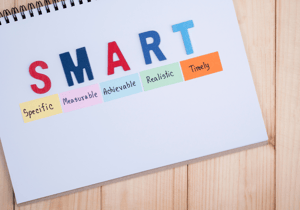

Close Reading
.png?width=300&name=ChoralDramatic%20Reading%20(1).png)
Choral/Dramatic Reading
Close Reading
Reading comprehension and analysis through performance.
View →

Error/Distraction Analysis
Close Reading
Teachers guide students through a reflection on the multiple choice questions to determine what makes the right answer right and the wrong answer wrong.
View →.png?width=300&name=Best%20Practices%20(11).png)
Get the Gist?
Close Reading
Students determine the Central Idea and most important details of a text by first identifying the gist, then summarizing specific chunks. View →
I Do, We Do, You Do Summarizing
Close Reading
Gradual release summarizing protocol to kick off summarizing activities for longer complex texts: I do it, we do it together, you do it together, you do it alone.
View →
On The Fence
Close Reading
Students are asked to complete a claim for both sides of an issues-based argument prior to planning their discussion or writing.
View →.png?width=300&name=Best%20Practices%20(9).png)
One Sentence Summaries
Close Reading
Students identify the central idea and key details of pre-determined chunks and form a one-sentence summary for each chunk View →
Paired Assessment Practice
Close Reading
Students select their answers to the Check questions but compare and debate inconsistencies with a partner or group before submitting.
View →

Partner Restatement
Close Reading
Students learn to restate questions using the 'Put the Question in the Answer' strategy and learn the importance of restating questions in their answers.
View →
Pause and Reflect Gallery Walk
Close Reading
Students move around the classroom to view chosen content or shared digital notes (i.e. quotes from text, questions, responses) then provide their own ideas through group conversation or written response.
View →
Prediction
Close Reading
Teacher displays the Check questions and students record their own answers for each multiple-choice question prior to seeing the multiple-choice options.
View →.png?width=300&name=Best%20Practices%20(12).png)
SMELL
Close Reading
Students will use the SMELL acronym to analyze sender, message, emotional strategies (pathos), logical strategies (logos), and language of a persuasive text to evaluate the author’s use of rhetorical appeals. View →
.png?width=300&name=Best%20Practices%20(10).png)
Text Mapping
Close Reading
Use when comparing two argumentative texts presenting the same or opposing arguments or with a single text as students work to develop the skills of identifying, evaluating, and tracing arguments. View →Vocabulary
.png?width=300&name=Dig%20into%20Root%20Words%20(1).png)
Dig Into Root Words
Vocabulary
Compare the meaning of words that share the same root, analyzing the root’s impact on the meaning of key terms from a reading.
View →
Frayer Model
Vocabulary
Building word knowledge and conceptual understanding using key vocabulary
View →
Gallery Walk
Vocabulary
Building word knowledge and conceptual understanding using key vocabulary
View →
Link It!
Vocabulary
Building word knowledge and conceptual understanding using vocabulary lists.
View →.png?width=300&name=List,%20Group,%20Label%20(1).png)
List, Group, Label
Vocabulary
Students sort vocabulary words into conceptual groups to reinforce learning and encourage critical thinking.
View →.png?width=300&name=Best%20Practices%20(14).png)
Morpheme Mapping
Vocabulary
As students learn the base meanings of common roots and affixes, they are able to apply that knowledge to unknown vocabulary in new contexts across multiple content areas. View →
Quiz-Quiz-Trade
Vocabulary
Building word knowledge and conceptual understanding using key vocabulary
View →
Root Word Challenge
Vocabulary
Building word knowledge and conceptual understanding using key vocabulary
View →
Shades of Meaning
Vocabulary
Building word knowledge and conceptual understanding using key vocabulary
View →
Silly Sentences
Vocabulary
Creating a silly sentence while using a new vocabulary word correctly is a fun and social way for students to have memorable experiences with new vocabulary.
View →
Storytelling with Vocabulary
Vocabulary
Building word knowledge and conceptual understanding using key vocabulary
View →.png?width=300&name=Best%20Practices%20(13).png)
Telephone
Vocabulary
Students build connections to new vocabulary by creating original sentences and sharing them with small groups through a familiar and fun game. View →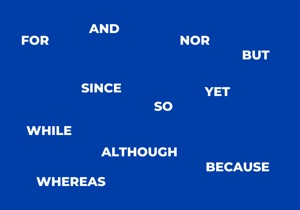
Using Conjunctions to Compare & Contrast
Vocabulary
Vocabulary development through articulating relationships between words and concepts
View →
Vocabulary BINGO
Vocabulary
Building word knowledge and conceptual understanding using key vocabulary
View →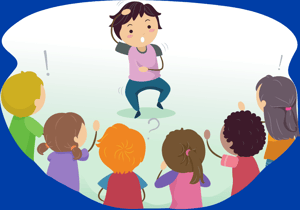
Vocabulary Charades
Vocabulary
Building word knowledge and conceptual understanding using key vocabulary
View →
Vocabulary Hot Seat
Vocabulary
Building word knowledge and conceptual understanding using key vocabulary
View →
Vocabulary Memory Match
Vocabulary
Building word knowledge and conceptual understanding using key vocabulary
View →

Vocabulary Timeline
Vocabulary
Building word knowledge and conceptual understanding using key vocabulary
View →.png?width=300&name=Word%20Mapping%20(1).png)
Word Mapping
Vocabulary
Students will explore a key conceptual term that will help them deepen their exploration and interpretation of the reading selection.
View →

Word Sort
Vocabulary
Building word knowledge and conceptual understanding using key vocabulary
View →
Word Toss + Definition
Vocabulary
Building word knowledge and conceptual understanding using key vocabulary
View →Culture + Community + Collaboration
.png?width=300&name=Fishbowl%20(1).png)
Fishbowl
Culture + Community + Collaboration
A variation on Socratic Discussions, in which students take turns participating in and observing rigorous inquiry-based discussion.
View →
Harkness Discussion
Culture + Community + Collaboration
A method for implementing student-led class discussion that incorporates student-formulated questions and responses.
View →
I Like, I Wish, I Wonder
Culture + Community + Collaboration
Creating a nurturing learning community.
View →
Socratic Discussion
Culture + Community + Collaboration
Rigorous dialogue to help students develop a deeper understanding of complex topics and build communication, collaboration, and critical thinking skills.
View →
Think-Pair-Share
Culture + Community + Collaboration
Build relationships, knowledge, and engagement through sharing responses to a prompt.
View →Background Knowledge + Overview

Quick Journal
Background Knowledge + Overview
Pre-reading, post-reading, reflection or skill introduction activity
View →.png?width=300&name=Best%20Practices%20(20).png)
Write It, Say It, Submit It
Drafting by hand, revising aloud, and using speech to text to bring student writing online
View →